

Autumn & Winter Outdoor Living: Designing Gardens That Perform All Year
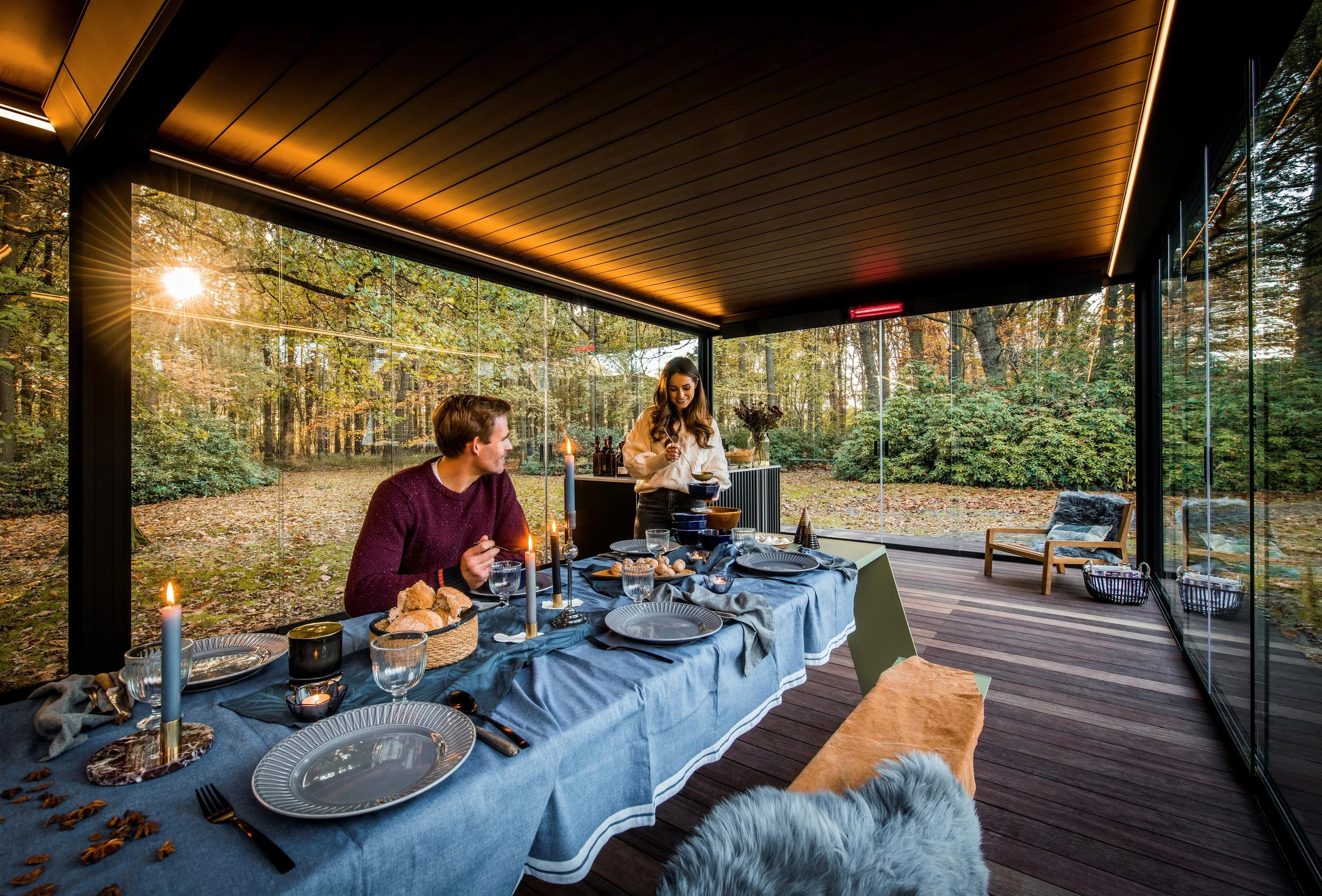
Design your Bespoke Renson Canopy with The Outdoor Kitchen Collective. Visit TOK_C showrooms.
For most gardens, Autumn still means retreat — furniture covered, the barbecue put away, the terrace forgotten until Spring. For the gardens we design at The Outdoor Kitchen Collective, that's never been the point. A garden conceived properly from the outset isn't a fair-weather amenity; it's an extension of the house, engineered to be used with the same ease in November as in July.
This is where the wider market is finally catching up. UK search and design trends this Autumn confirm a shift away from seasonal outdoor living toward something more considered: spaces designed for genuine year-round comfort, not just Summer entertaining. For our clients — private homeowners investing in a long-term outdoor asset, and the architects and designers specifying it on their behalf — this isn't a trend to react to. It's the standard we've always built to.
Here's what's shaping the best gardens this Autumn, and how it translates into a bespoke outdoor kitchen and living space.
From Seasonal Feature to Year-Round Room
The defining shift this Autumn is one of intent. Rather than closing the garden down as temperatures drop, homeowners are extending its use deliberately — weatherproof textiles, considered cushioning, outdoor rugs — but for a high-end space, soft furnishings are only ever the finishing layer. The real work happens earlier, in the architecture of the space itself: proper shelter, integrated heating, and materials specified to perform in British weather, not merely tolerate it.
A Renson canopy overhead is what makes this possible at a serious level. It's the difference between a patio that's occasionally usable in Autumn and an outdoor room that's genuinely part of the house's living space — sheltered, controllable, and comfortable enough that guests forget they're not indoors.
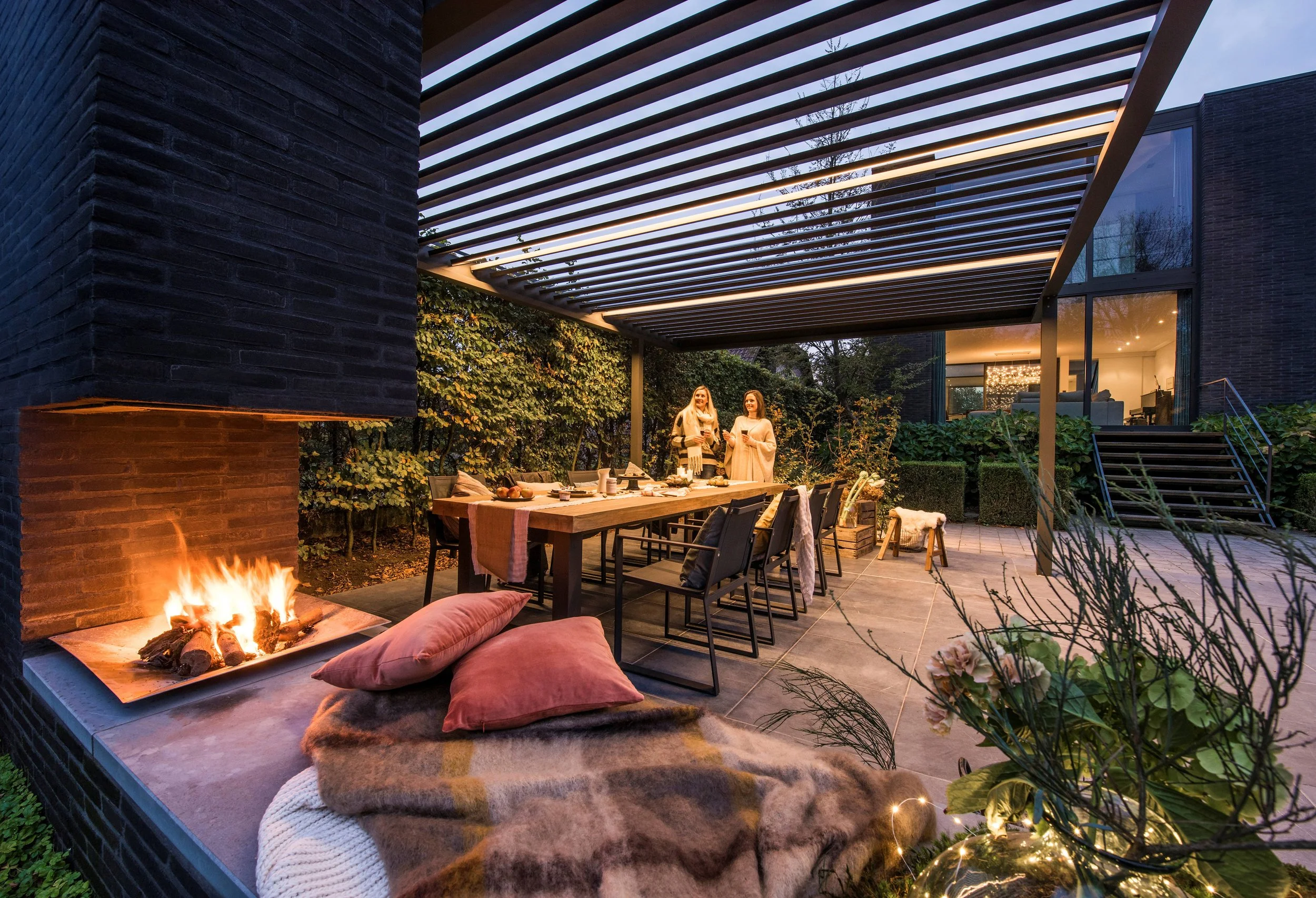
Renson Canopies - Extend the Seasons with TOK_C
Fire as Architecture, Not Accessory
Integrated firepits — gas or wood-burning — have moved from garden accessory to genuine design feature. Done well, a fire element isn't dropped into a space; it's designed as the anchor the rest of the layout works around, the natural point where a seating arrangement, a bar, or a dining area resolves. For evening entertaining through Autumn and winter, it's doing as much work architecturally as it is thermally.
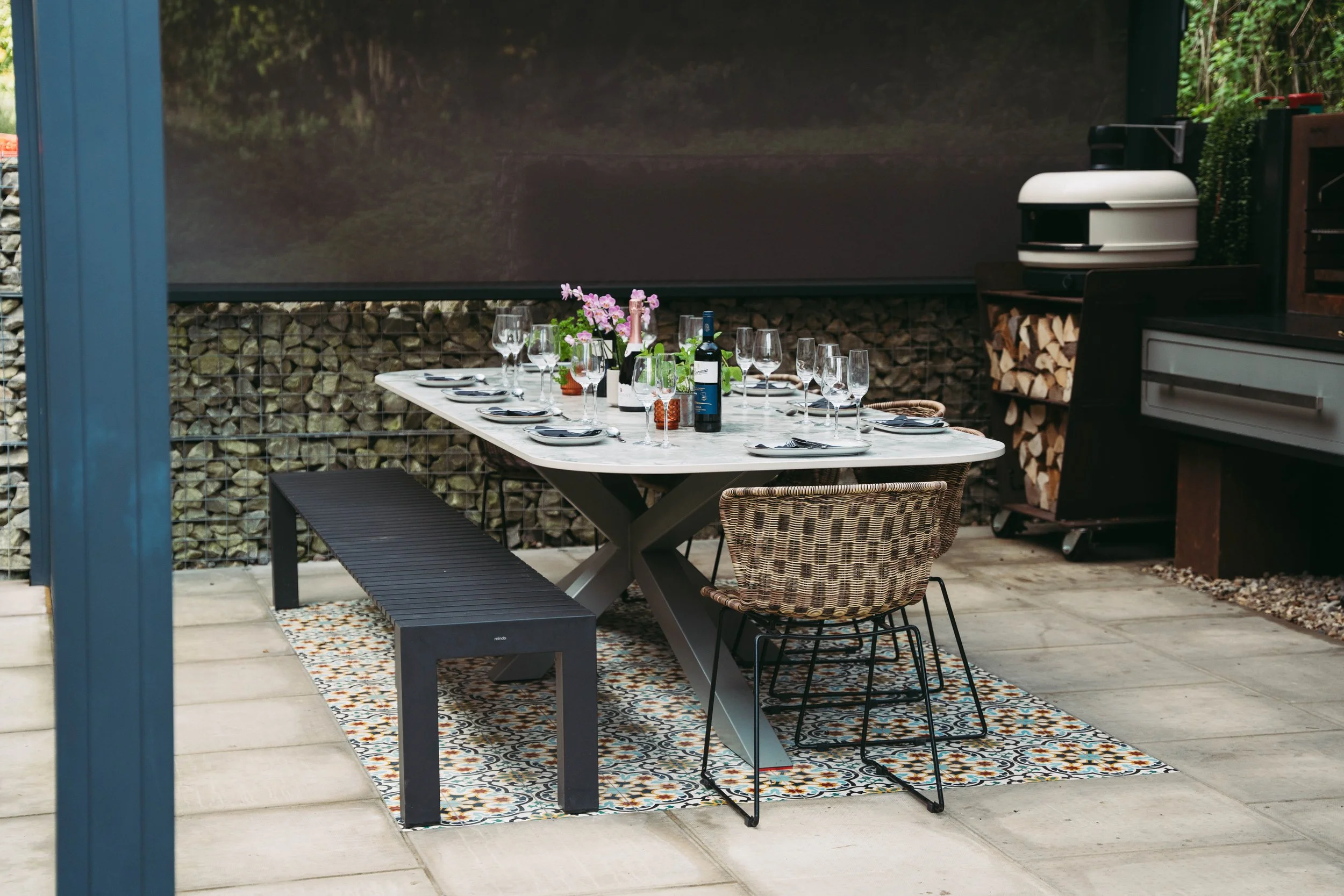
TOK_C Bespoke Outdoor Dining Table sitting beneath a Renson Camargue Canopy with Louvred Roof, integrated Heating and Lighting.
Considered, Adaptable Seating
Off-the-shelf modular rattan sets have their place in the mass market, but the principle behind them — flexibility, the ability to reconfigure a space for four or for twenty — is exactly what bespoke outdoor furniture should deliver at a higher level. For our clients, this typically means custom-built seating and dining arrangements designed around the specific proportions of the space, upholstered in weather-grade materials that hold their quality over years, not seasons.
A Warmer Palette, Applied with Restraint
Autumn's colour story — rust, mustard, burnt orange, deep jewel-tone velvets — is a useful seasonal cue, but in a high-end garden it's best used sparingly: a considered cushion, a throw, a single striking planted feature, rather than a full redecoration. The goal is a space that feels seasonally attuned without losing the timeless material palette — natural stone, timber, ceramic, brushed metal — that should anchor the design year-round.
Lighting Designed, Not Added
With early sunsets, lighting stops being decorative and becomes structural to how a space functions after 5pm. The best Autumn gardens layer their lighting deliberately: low-glare ambient light for atmosphere, task lighting over the cooking and dining zones, and accent lighting that draws the eye toward key architectural features rather than simply illuminating the whole space. It's lighting design in the same sense as interior lighting design — considered room by room, not an afterthought of festoon lights strung up in October.
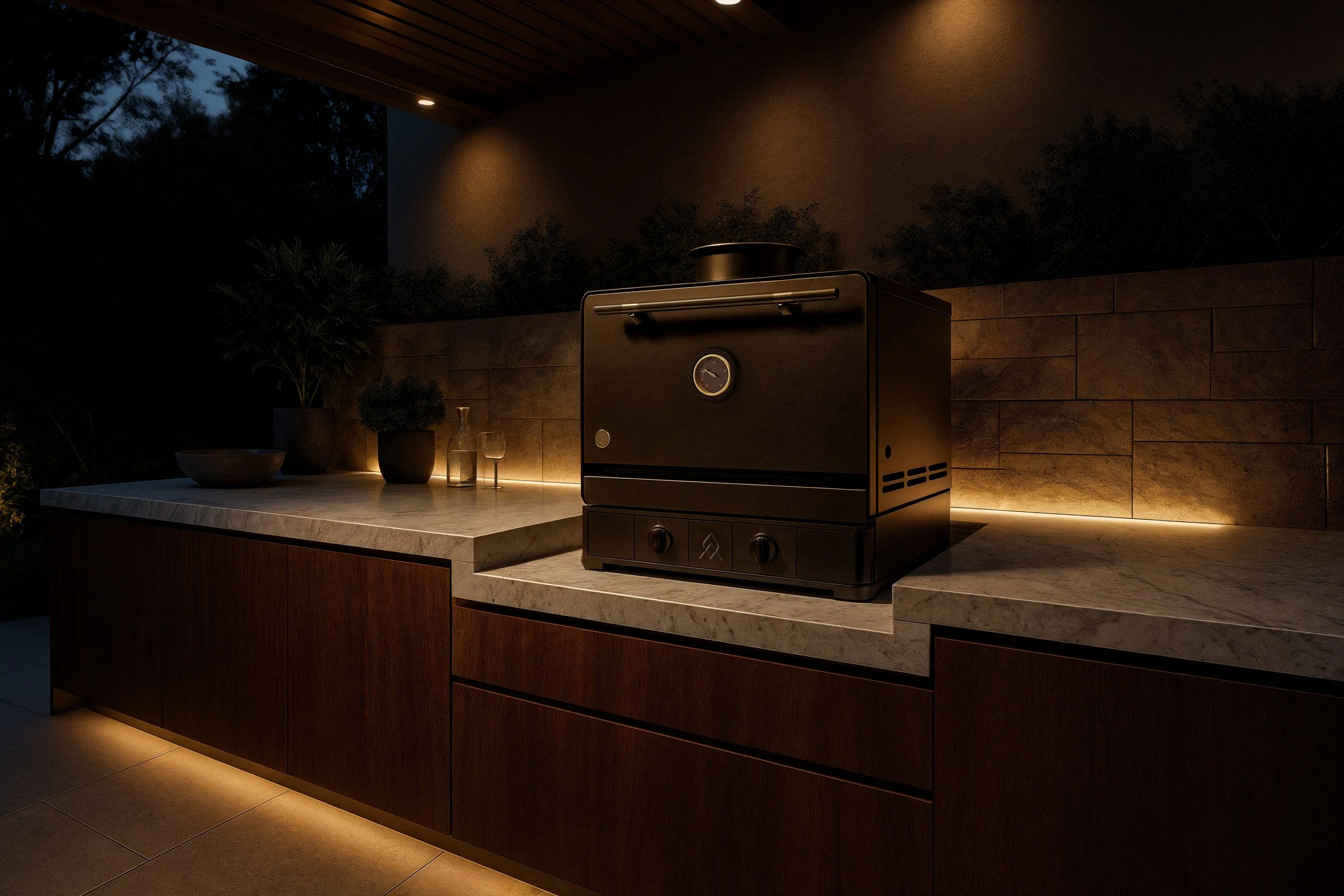
EMBERHAUS FIRE OVEN HAS BEEN CREATED TO SIT BEAUTIFULLY WITHIN A BESPOKE OUTDOOR KITCHEN
Alfresco Cooking, Elevated for Autumn and Winter
This is where the shift toward year-round outdoor living is most visible — and most relevant to what we do. Outdoor cooking has moved decisively beyond the once-a-year barbecue. Pizza ovens, grazing boards, and slow-cooked feasts are now part of the regular entertaining repertoire, and for serious outdoor cooks, the kamado-style Big Green Egg has become a genuine centrepiece rather than a seasonal appliance.
Its ceramic shell holds and regulates heat with a precision gas barbecues can't match, which is exactly why it excels in colder weather — a slow-smoked joint or a low-and-slow brisket performs as well at 4°C as it does in midsummer. It's arguably better suited to autumn and winter entertaining than to summer: the kind of rich, patient cooking that suits a long evening rather than a quick weeknight grill.
What's changed the experience of using it through the colder months is connected technology. A Wi-Fi or Bluetooth-enabled meat thermometer lets you monitor internal temperature from your phone — from indoors, from the table, from beside the firepit with your guests — rather than making repeated cold, dark trips across the garden to check. For a homeowner hosting a considered dinner rather than a casual barbecue, that's a meaningful difference: the host stays part of the evening instead of managing it from outside in the cold.
Set within a properly integrated outdoor kitchen — sheltered under a Renson pergola, built into a considered layout rather than positioned as an afterthought — this is what genuinely year-round alfresco cooking looks like: precise, comfortable, and usable regardless of the forecast.
Seasonal Planting as Detail
Chrysanthemums, cyclamen, pansies, heathers, and ornamental grasses bring instant, reliable colour to containers once summer planting fades — a small, low-cost detail, but one that signals a garden is being properly maintained and cared for through every season, not just its peak months.
The Principle Behind All of It
Every trend above points to the same underlying idea: the garden as a genuine extension of the home, not a seasonal amenity. Shelter, heat, lighting, and cooking infrastructure specified properly from the outset are what separate a garden that's abandoned in October from one that continues to earn its place in the household — and in a property's value — through every season.
This is the thinking behind everything we design at The Outdoor Kitchen Collective: bespoke outdoor kitchens and Renson-covered living spaces built as a long-term investment in how a home is used, not a summer indulgence.
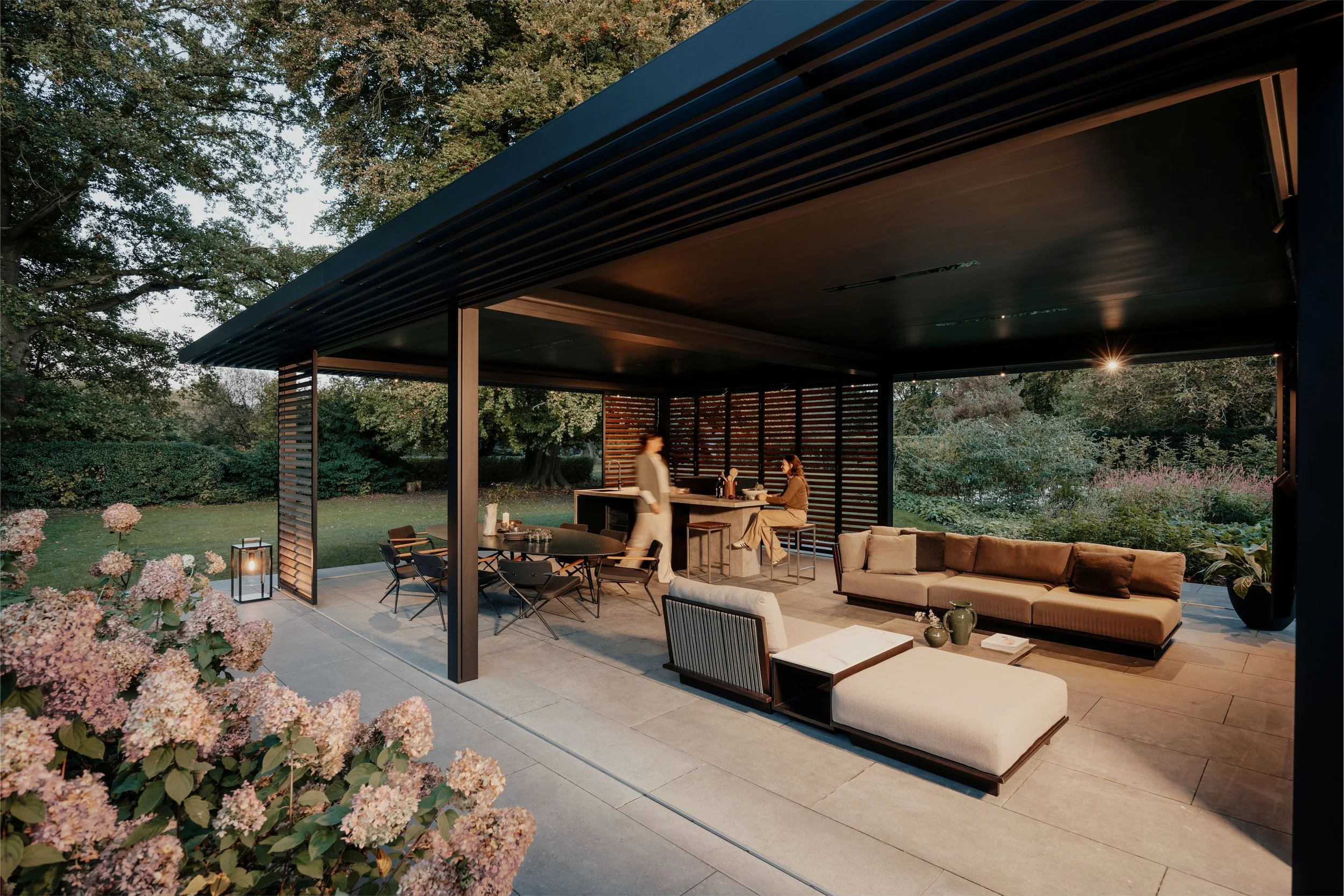
Renson Amani - by Bespoke Design at The Outdoor Kitchen Collective (Renson Outdoor Image)
For homeowners and design professionals exploring a bespoke outdoor space
Every project starts with the architecture of the space and how it's intended to be used across the year — we'd be glad to talk it through, whether that's a private consultation or a visit to see the possibilities in person at our design barn in St Albans. We also run outdoor cooking masterclasses for clients wanting to get properly acquainted with their new kitchen before the season's first dinner party.
Get in touch with The Outdoor Kitchen Collective to discuss your project.
